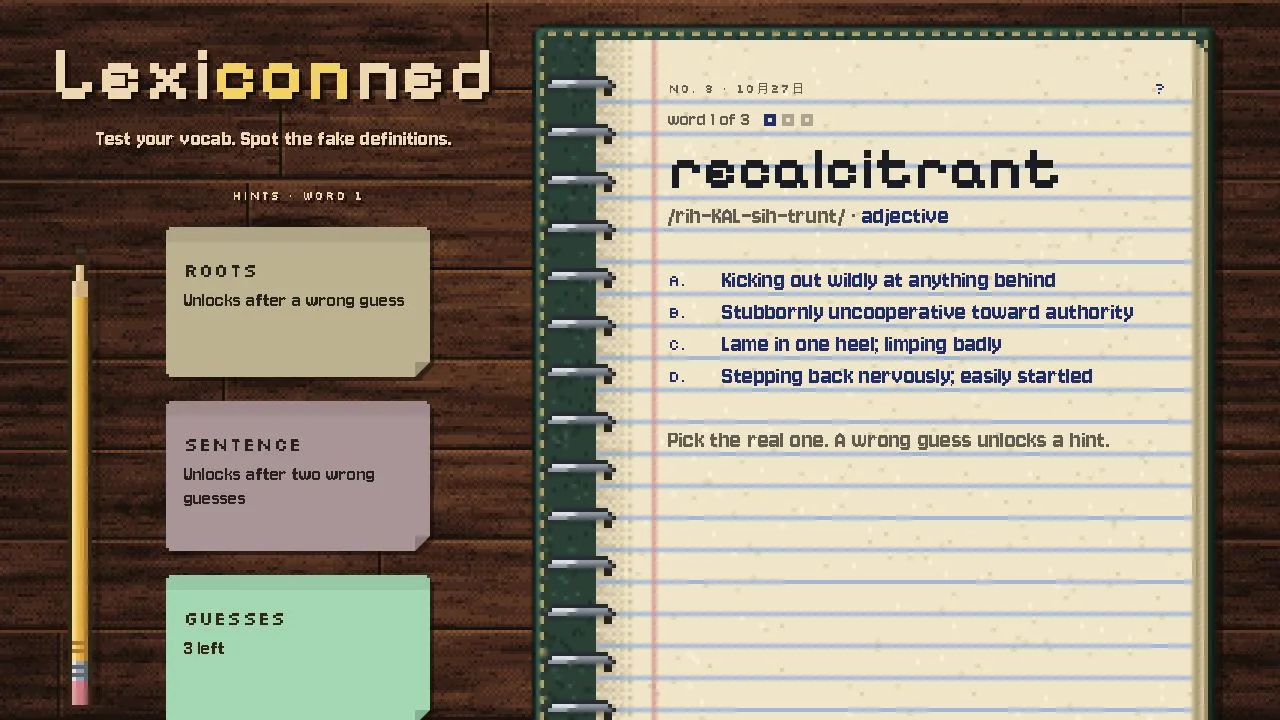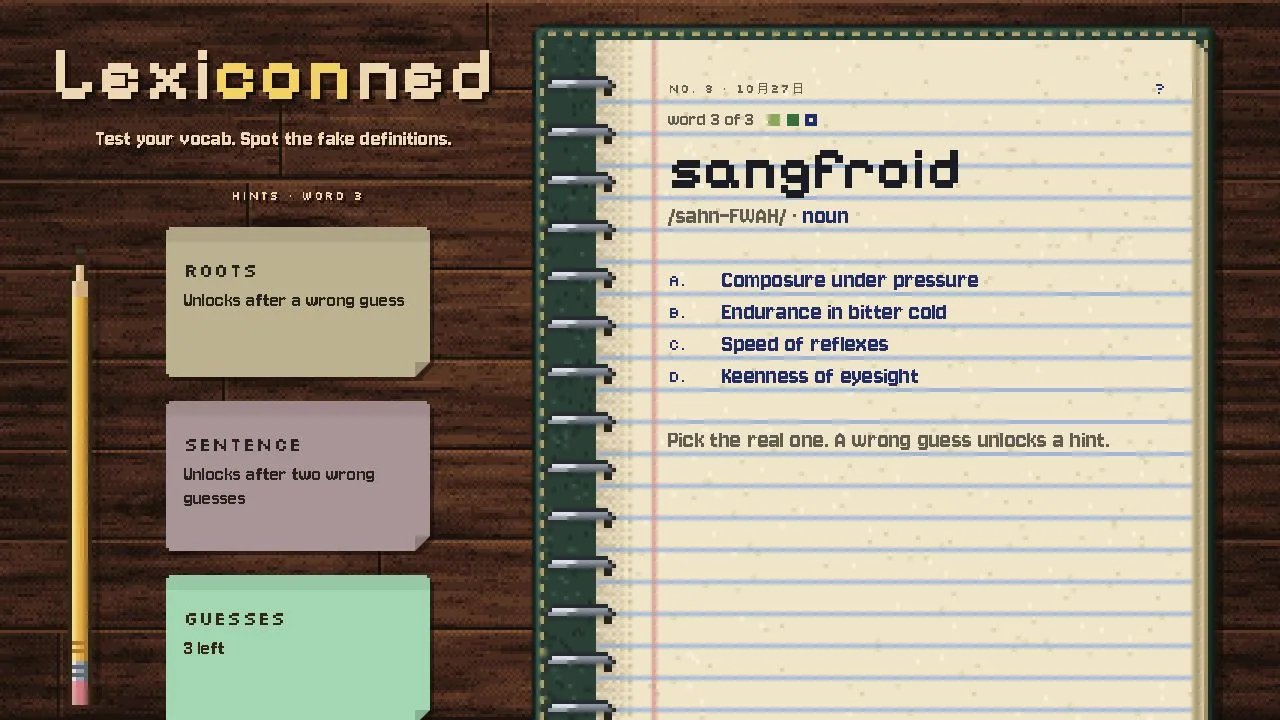

Lexiconned is a daily vocabulary game in which you pick the one real definition among four choices for each of three words. You can try each word up to three times, but every wrong choice lowers the points still available. In my October 27, 2026 daily round, a convincing fake answer drew me into using both of the game's clues before I finished with 7 out of 9 points.
How do the guesses and hints work?
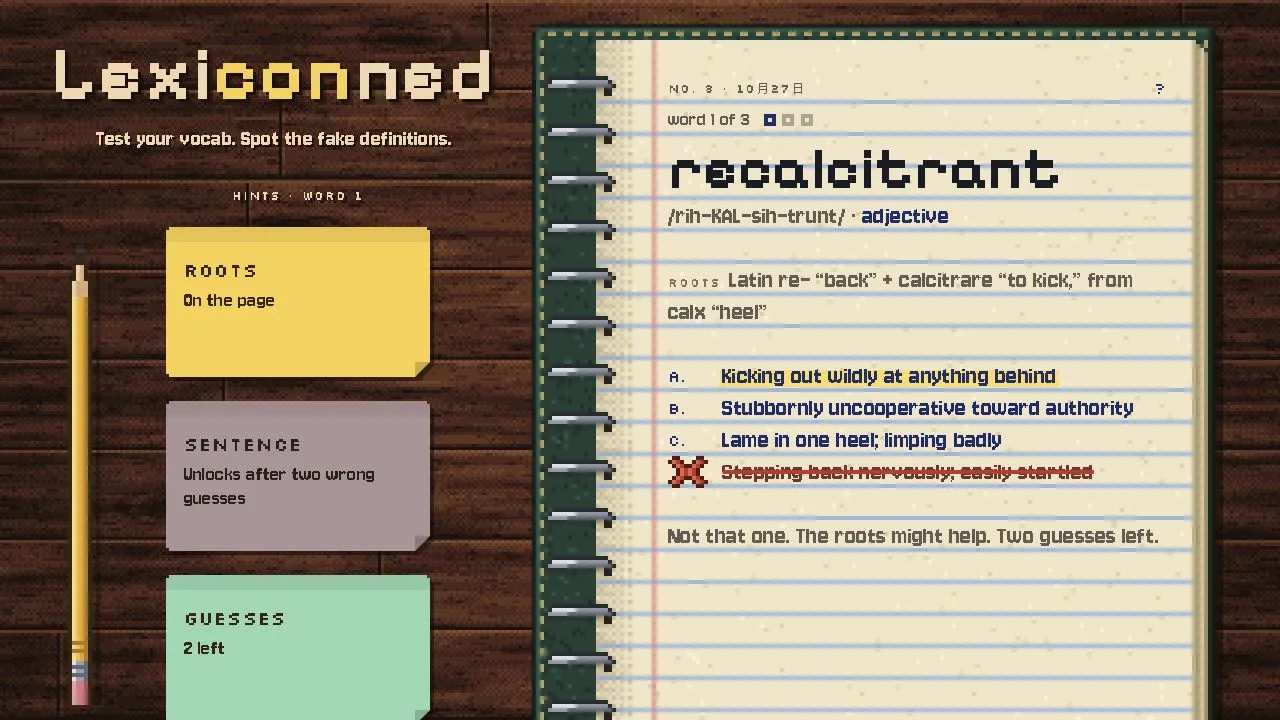
Each page of the notebook shows a word, its pronunciation and part of speech, and four possible meanings. I read the whole set, clicked the definition I believed was real, and watched the game either mark it correct or cross it out. A wrong choice stays visible as a crossed-out option, so I did not have to remember which decoy I had already tried.
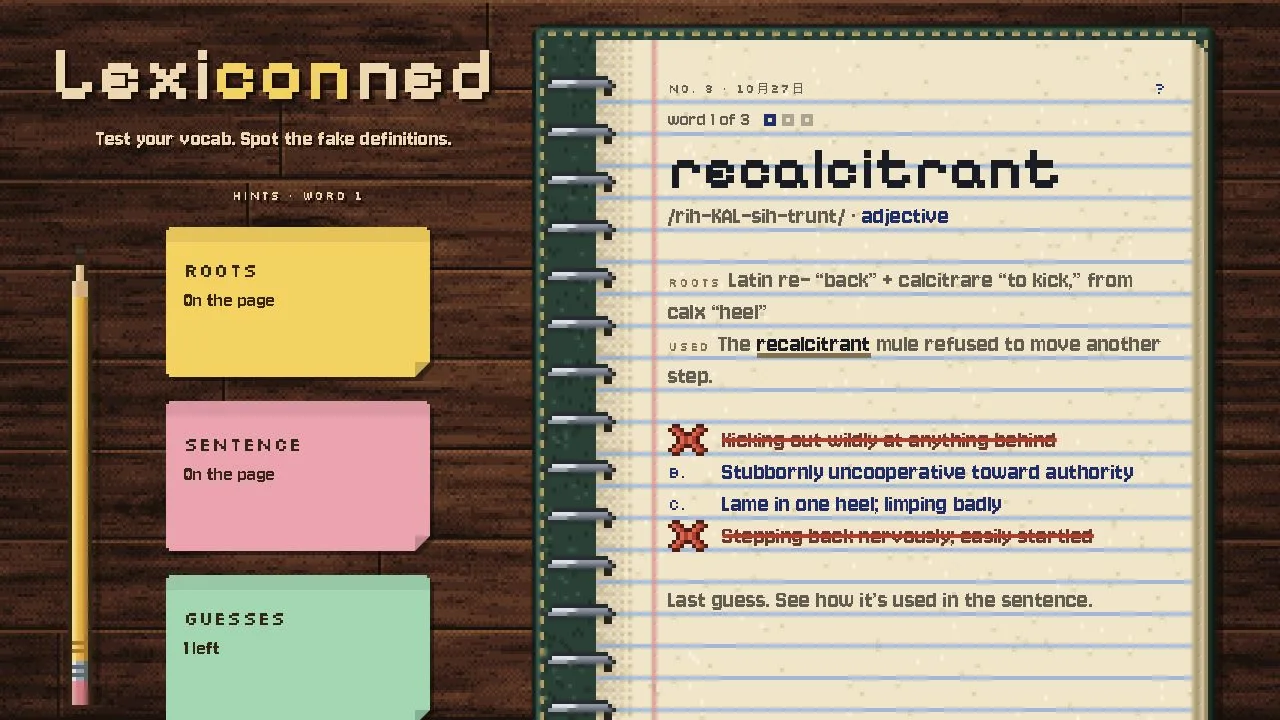
The first miss puts a roots clue on the page. The second adds an example sentence and leaves one final attempt. If the third guess is wrong, the word is lost; the rules panel says a correct first, second or third guess earns three, two or one point respectively. The three words therefore offer a maximum of nine points. The clues are automatic consequences of mistakes rather than buttons you can request before committing to a choice.
Can the roots clue mislead you?
It did in my round. On the first word, I initially chose a definition about nervous movement and got it crossed out. The roots then described a Latin idea of kicking backward. I treated that literal image as the meaning and picked a second decoy about kicking, which was also wrong. Only the unlocked sentence, about a mule refusing to move, made the intended sense clear enough for my last guess.
That sequence is the most useful warning I can give another player: roots explain a word's history, but a fake option can echo the literal root more closely than the current definition does. Read the remaining choices against the example sentence when it appears. I cannot say every day's decoys work this way; this is what happened with one word on the page I played.
What does a completed page show?
After each answer, I had to turn the page to reach the next word. The second and third words both went right on my first try, so their roots and sentences stayed marked as unnecessary. The final page listed each word with its earned points: one point for my third-try save, then three and three, making 7/9. It also displayed days played, a perfect streak, total points, an average score and a countdown to the next words.
This is a compact quiz rather than a long word search. The pressure comes from choosing among plausible definitions while deciding how much of a score you are willing to risk before seeing help. A first-try answer feels satisfying, but the staged clues give a missed word a useful second life instead of ending it immediately.
I tested the October 27 daily page on desktop and completed it once on the direct site, then completed a separate full run inside an iframe to check embedded play. I did not verify a mobile device, an archive, a replay option, account features, or how statistics behave across days. The rules say new words arrive at midnight, but the page does not name a timezone, so the countdown is the safer guide to the next set.