
Bracket City is The Atlantic’s daily word puzzle in which answers to nested clues gradually uncover a fact about that date in history. Start with an answerable inner bracket, type its solution, and reread the larger clue that the new word helps form. In our completed archive puzzle, a tiny letter answer eventually became part of a clue about connecting dots.
Created by Ben Gross, the game joined The Atlantic’s puzzle lineup through a licensing partnership, as described by the publisher’s games team. Its appeal is watching language change shape: solving one clue can expose another meaning inside a word you thought you already understood.
How the brackets turn into new clues
The tutorial makes the central trick tangible. Answering a shark-part clue with “fin” contributes letters to “fingers”; solving the next clue produces “ten,” which helps form “tennis.” The answers are building material for the surrounding text, rather than isolated crossword entries.
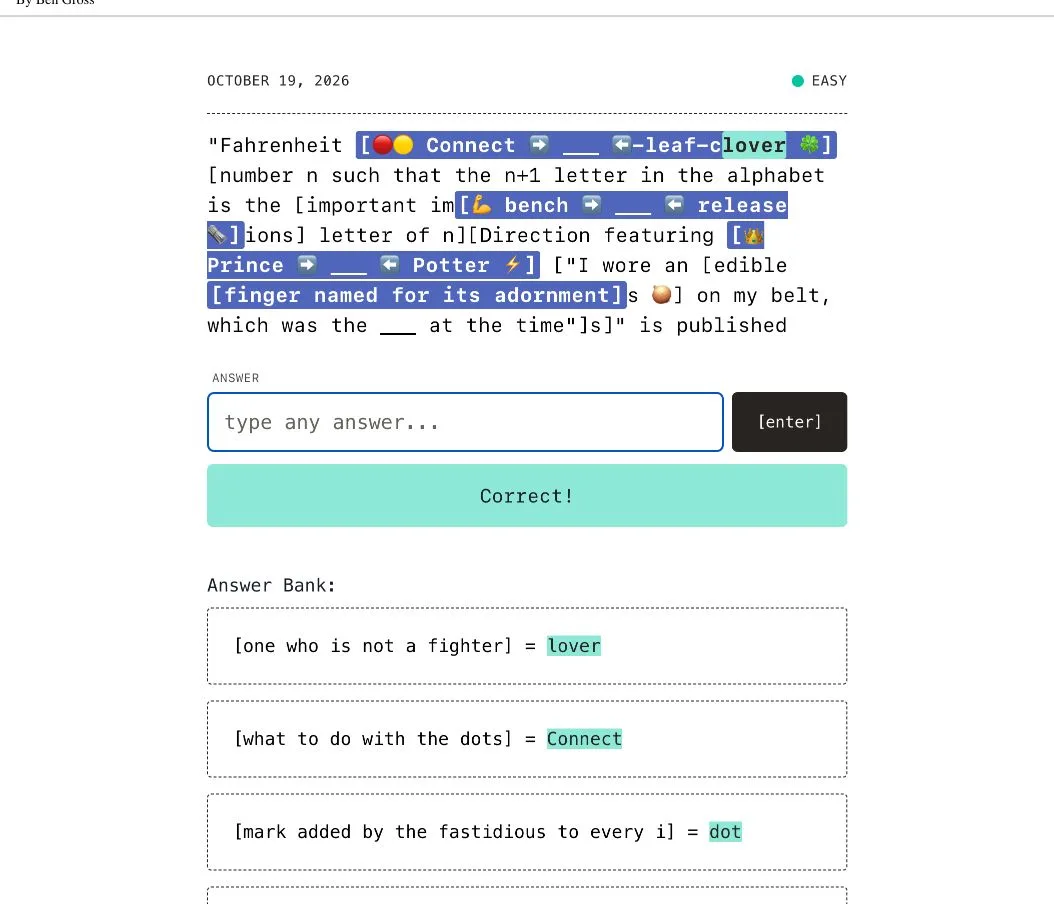
In normal mode, we typed an answer into the entry field and submitted it. Accepted solutions replaced their bracketed clues, and solved text appeared in pale green. That colour marked progress; it was not Wordle-style feedback about individual letter positions. Newly readable clues then gave us somewhere else to work.
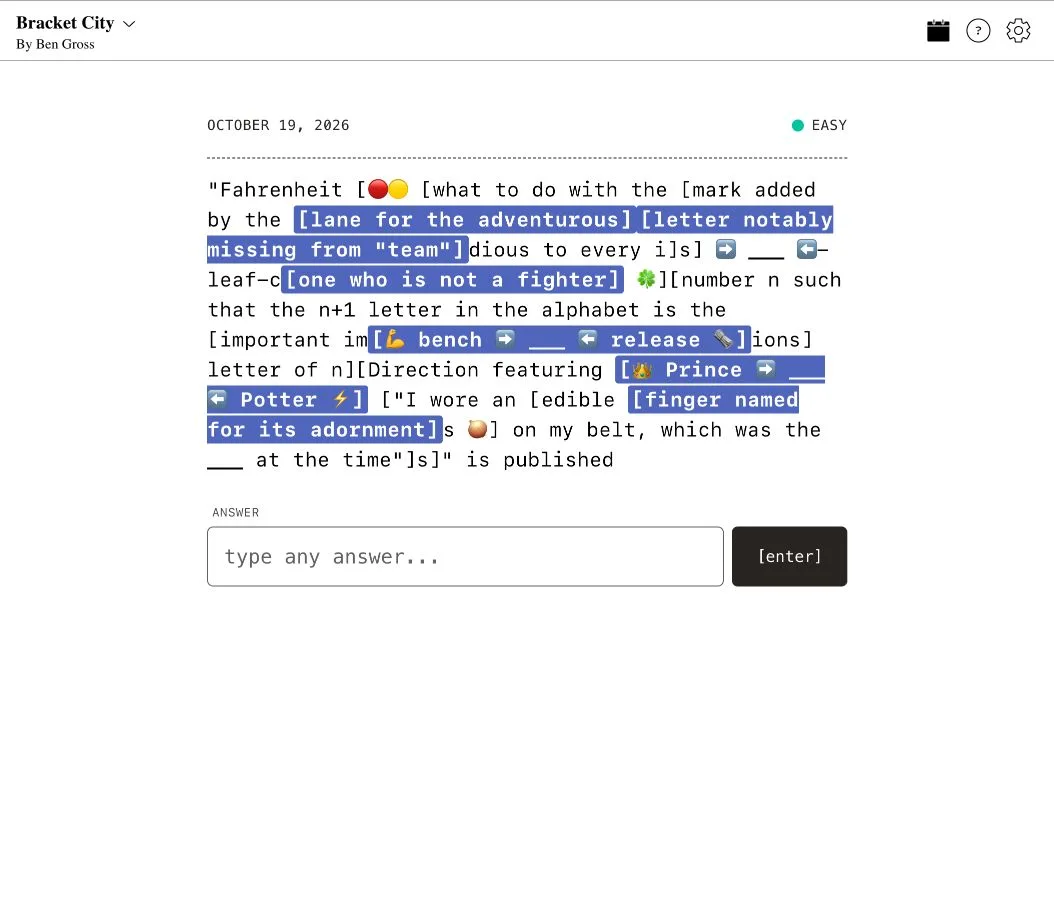
We followed the tutorial with the October 19, 2026 archive puzzle, labelled Easy and credited to Ben Gross. We completed all 14 clues without peeks or reveals. An answer to “not a fighter” helped produce “clover,” while a separate chain supplied the name of a familiar connection game. Both branches converged on the same number. Typing the number as a word worked, with the accepted answer displayed as a digit.
The useful habit is to reread after every accepted answer. A clue that looks incomplete may simply depend on another branch. Conversely, a short, ordinary answer can be the missing fragment that makes an apparently strange phrase readable.
Hints without jumping straight to today’s answer
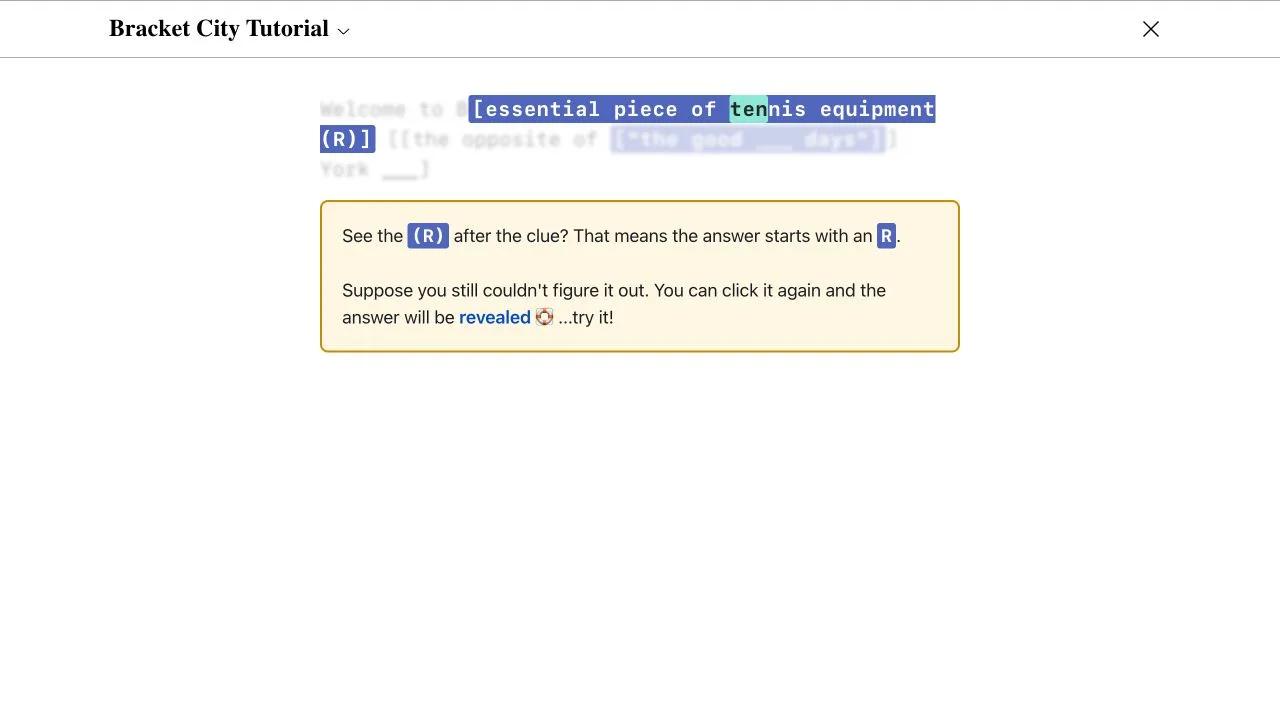
We tested both assistance steps in the tutorial. Clicking a clue offered a Peek confirmation; accepting it showed the first letter. Clicking that clue again offered Reveal Word. On the tennis-equipment clue, the first step exposed an “R” before the second supplied the solution.
Try that first-letter nudge only after checking the newly formed wording and any other available branch. Because solutions can become fragments inside longer words, looking for a synonym alone can miss the construction. Reading the surrounding letters matters just as much.
Settings also described a hard mode with no submit button and every keystroke counting. Its switch was locked once our puzzle had started. We inspected that explanation but played the full round in normal mode, so this review does not assess hard-mode penalties.
The payoff is a sentence, not a filled grid
The best moment in our round was seeing two independently solved branches fit together. The less intuitive part was remembering to reconsider the surrounding text instead of treating each green answer as a finished, disconnected task. Familiarity with English expressions and cultural references helped more than an extensive list of unusual words.
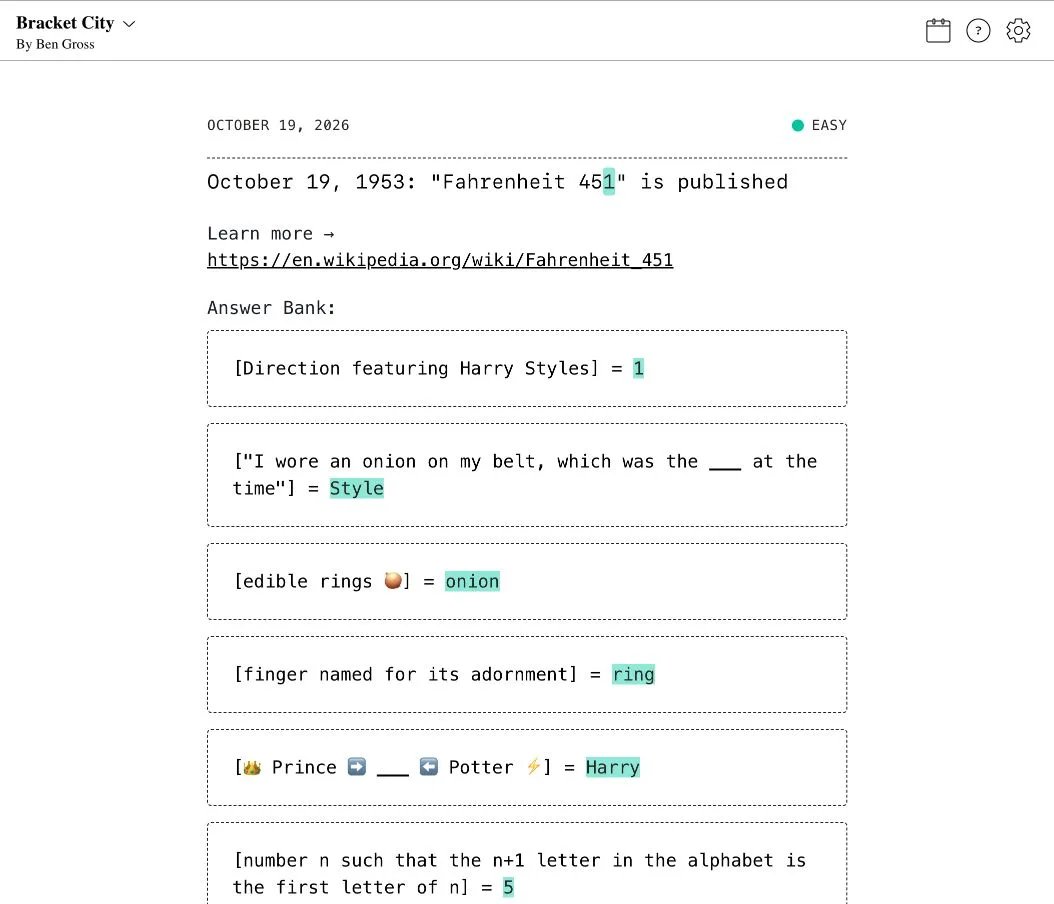
Completing the archive round left a historical statement and a Learn more link on screen, along with the answer bank. We did not see a separate results or sharing panel in that tested view. The round was not timed, so we would not attach a precise completion estimate to it.
If you enjoy Squaredle, this offers a different use for word-spotting patience: interpreting changing clues instead of scanning a letter grid.
Bracket City FAQ
How do you play Bracket City?
Solve an available inner clue, submit its answer, then read the surrounding text again. Each replacement helps uncover larger clues until the final historical fact is readable.
Does Bracket City have hints?
Yes. The tutorial let us peek at a clue’s first letter, then reveal its word through a second confirmation. These are separate assistance steps.
Can you play previous Bracket City puzzles?
Yes. We opened the calendar in the official game, selected October 19, 2026, and completed that archive puzzle. This verified a working archive in the tested session, without establishing its full date range or future access conditions.