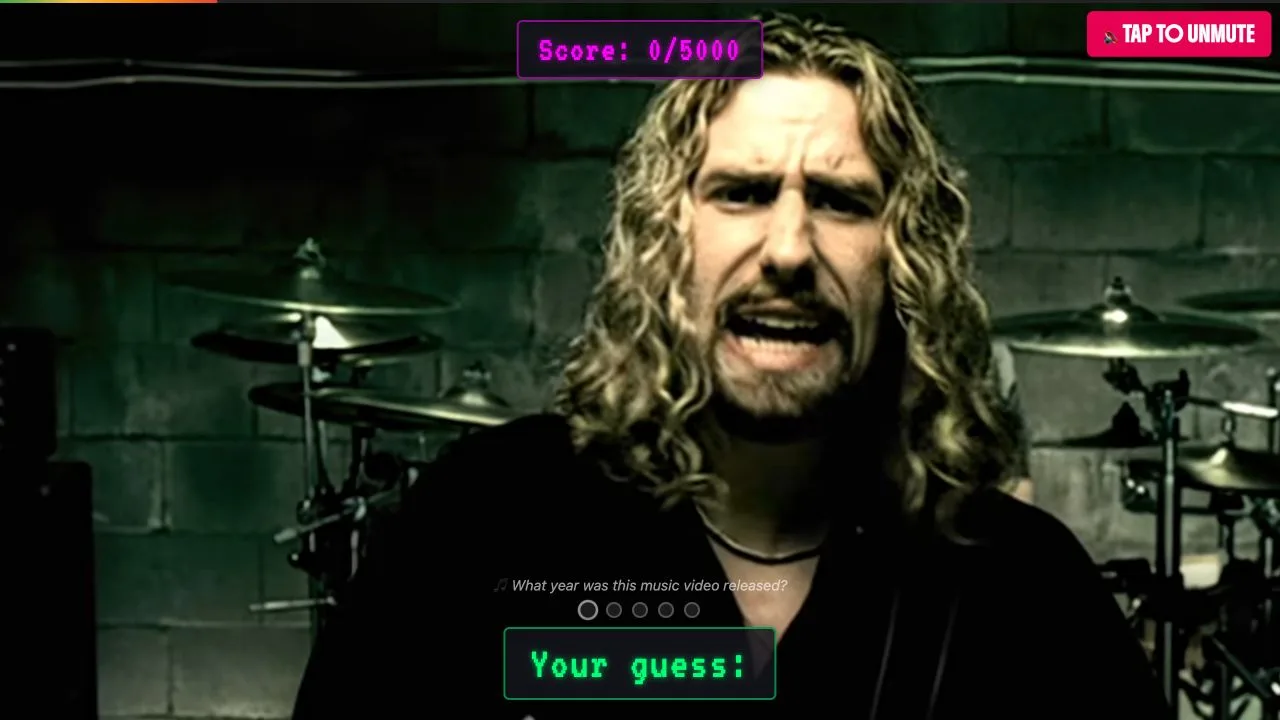

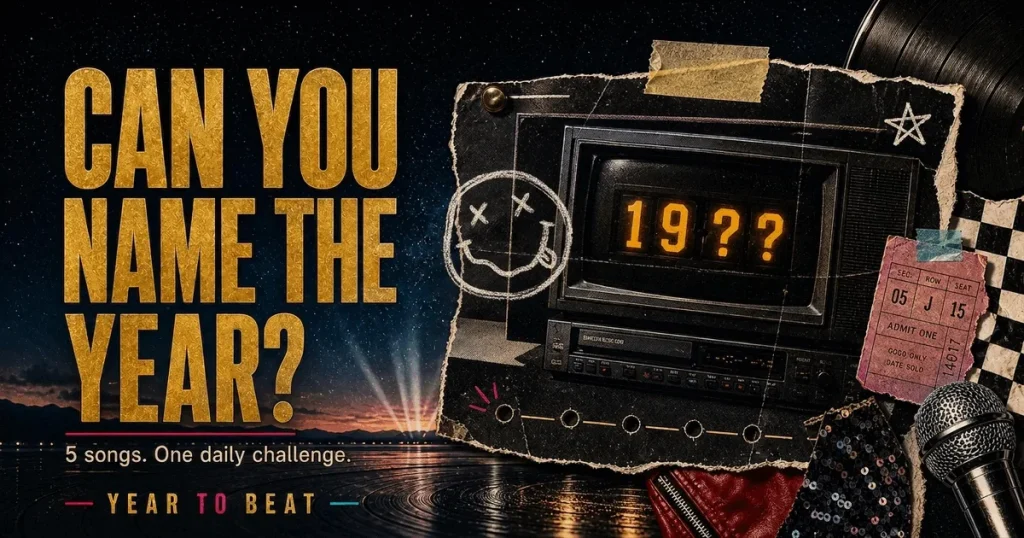
Year To Beat is a daily music video quiz built around release years. Watch five videos, enter a four-digit year for each, and earn points according to how close your estimate is to the video's release year. In my completed set, two guesses missed by just one year, and each still earned 932 points.
Where do you enter your year?
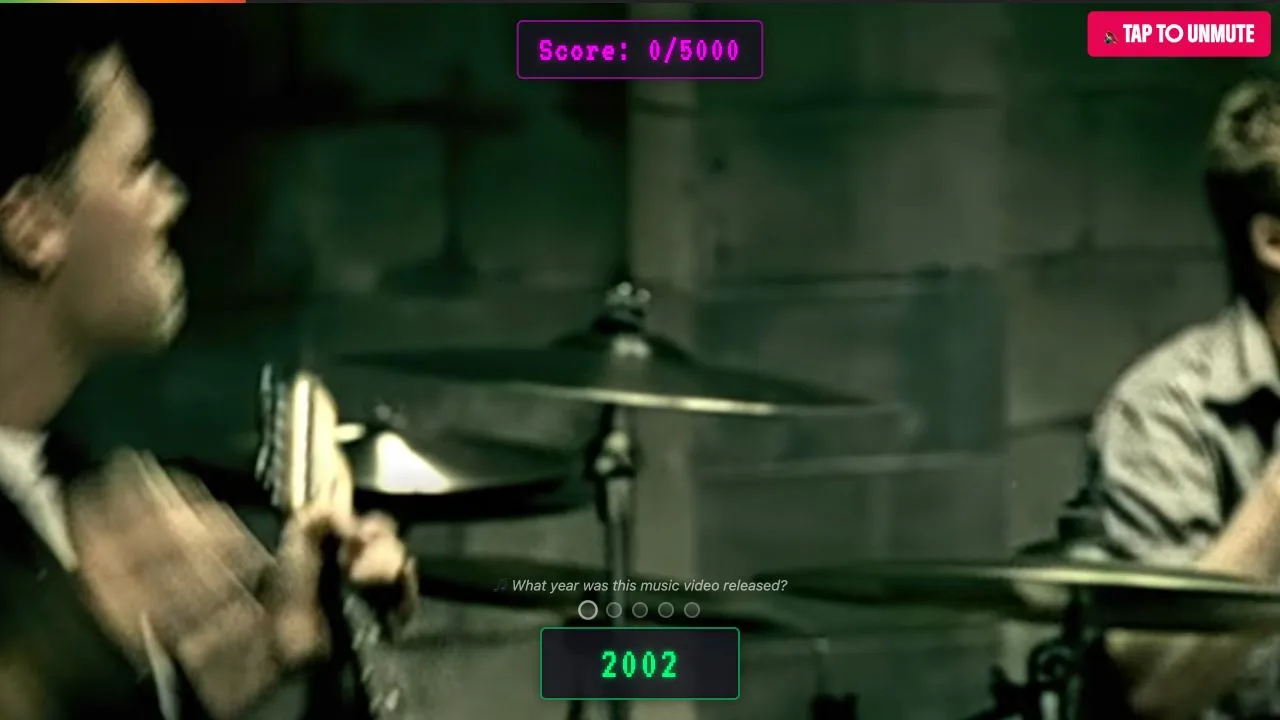
The video fills most of the game screen, with a year prompt near the bottom and five progress markers above it. On desktop, I entered digits directly with the keyboard; I did not need to locate a conventional text box first. Enter submitted the estimate. Backspace also worked: on the third track, I deleted the last digit of my initial estimate and replaced it before submitting.
Each submission led to a reveal showing the correct year, the distance from my guess, and the points earned. I then used Next track to continue. This was one committed estimate per video followed by a reveal, rather than a sequence of guesses used to narrow down the same answer.
A one-year miss still earns 932 points
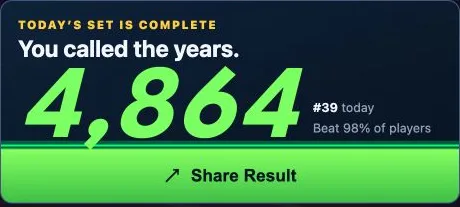
My first estimate was one year late. The reveal awarded 932 points, so a small error cost 68 points rather than wiping out the round. Later, a guess one year early received the same 932. Three exact estimates earned 1,000 points apiece, bringing the completed five-track set to 4,864 out of 5,000.
The scoring explanation in the game listed 869 points for a two-year miss, 705 for five years, and 497 for ten. Those examples make the decision clearer: if you cannot recall the exact date, placing the video near the right year still matters. They do not establish a scoring formula, and I did not test those larger distances myself.
The early or late wording was more useful to me than the colored digits alone. It explained the direction of the mistake immediately, while the numerical distance showed its size.
Date the video, not just the song
The on-screen question specifically asks when the music video was released. Recognizing a song or remembering its album year may therefore leave another date to resolve. Pay attention to the particular video version before treating your first musical association as the answer.
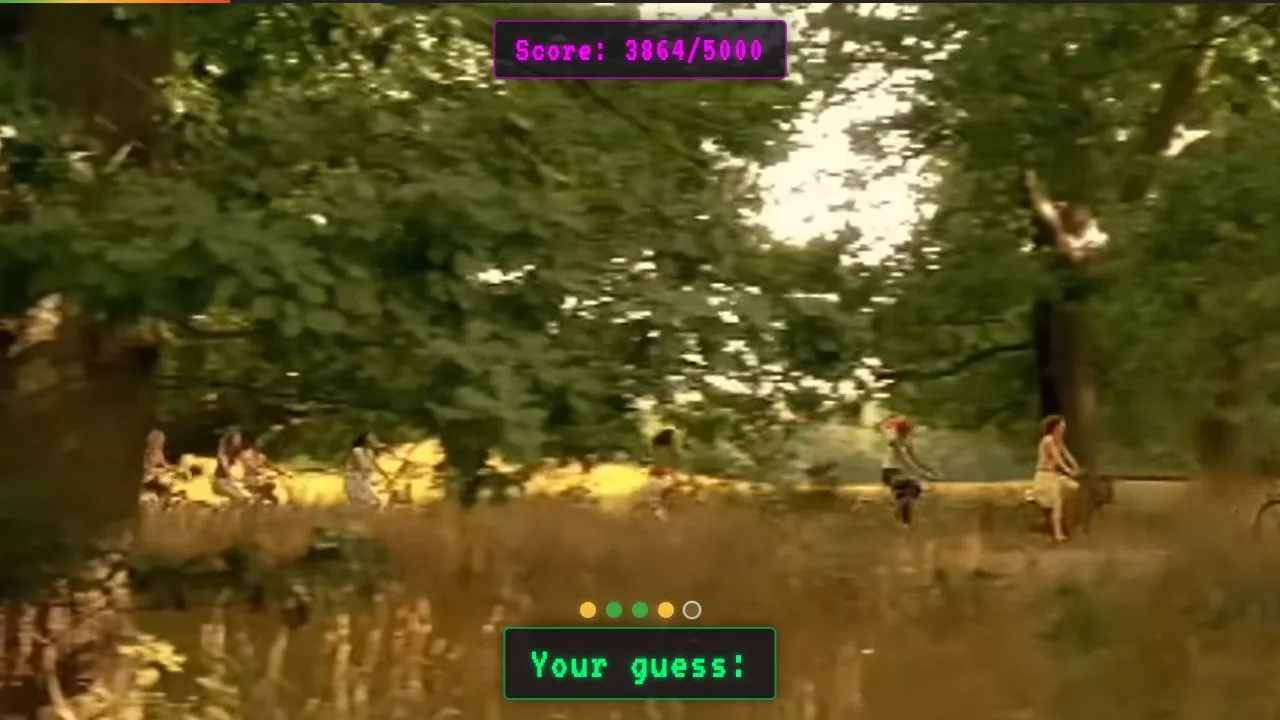
Visual evidence was available on the first and fifth tracks of my run: a green-toned band performance on the first, and warm outdoor footage on the fifth. Clothing, staging, and production style are possible clues, although this single set cannot establish how reliably they date unfamiliar videos. I also encountered song titles in the ordinary YouTube player controls, so this was not a blind recognition test.
Playback limited this desktop test
I completed daily challenge 240 on October 26, 2026, without signing in. However, the middle three videos remained black or loading in this browser session, including after a normal player-button attempt on the second track. I finished those rounds using the visible titles and existing music knowledge. I did not hear the audio, so I cannot assess the listening experience or recommend this run as evidence of reliable playback across browsers.
The result screen confirmed completion and offered sharing and a per-track recap. Investigation pauses make the session unsuitable for estimating a normal play time. Mobile controls, saved progress, account features, and the exact daily reset were not tested. The official Archive terms describe a paid subscription for Archive access; I did not purchase or play that content.