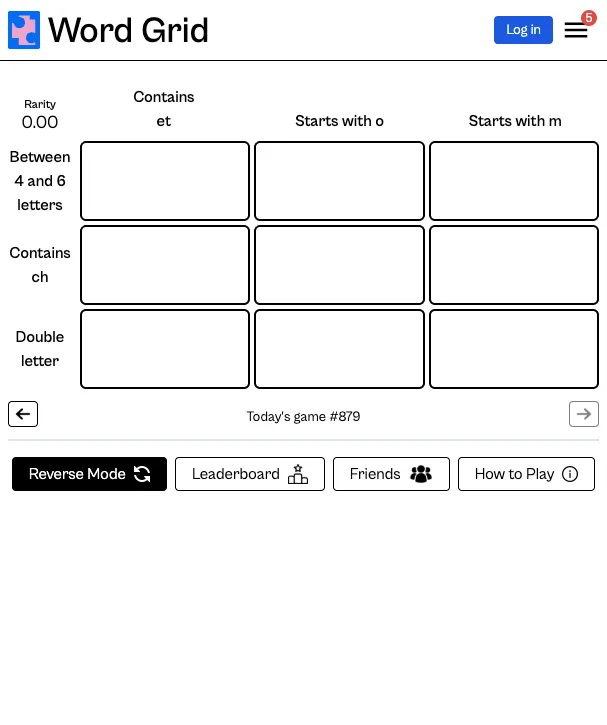

Word Grid is a daily word puzzle from CleverGoat with a 3x3 board: each square needs one English word that satisfies both its row rule and its column rule, such as "starts with M" and "double letter". Every word is scored by how many other players used it, so the goal is not just to fill the grid but to finish with the lowest total rarity you can.
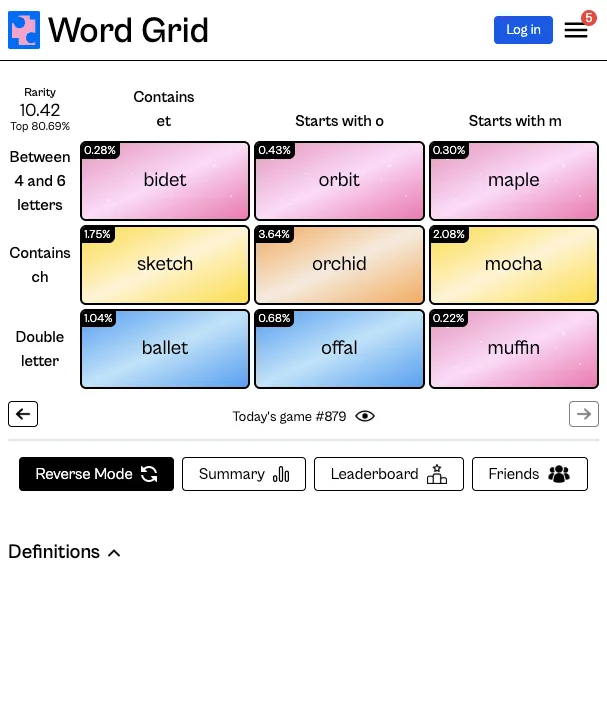
I played game #879 on 28 October 2026 in normal mode, logged out in a desktop browser. The rows were "between 4 and 6 letters", "contains ch" and "double letter"; the columns were "contains et", "starts with o" and "starts with m". It took a few minutes to fill and longer to improve.
How do you play Word Grid?
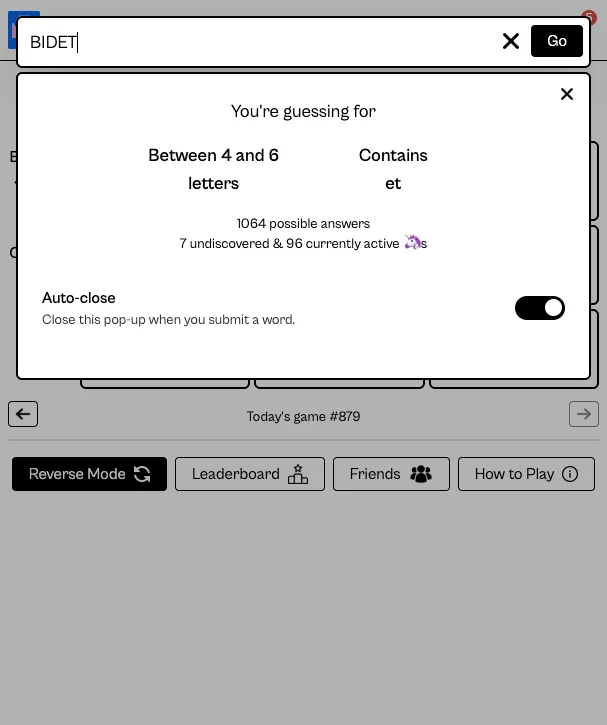
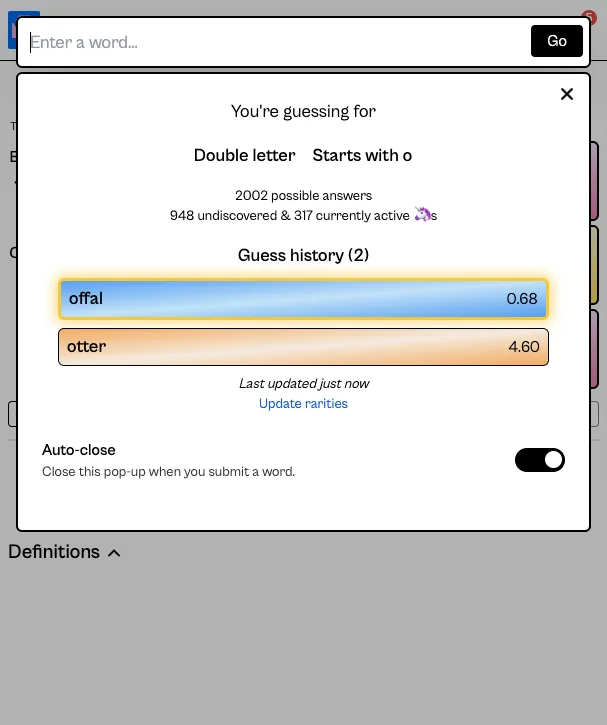
- Tap a square. A pop-up names its two rules and counts how many valid words exist. My first square had 1,064 possible answers.
- Type a word and press Enter. It must be in the game's word list, which the Word Grid FAQ says is SOWPODS, the Scrabble dictionary.
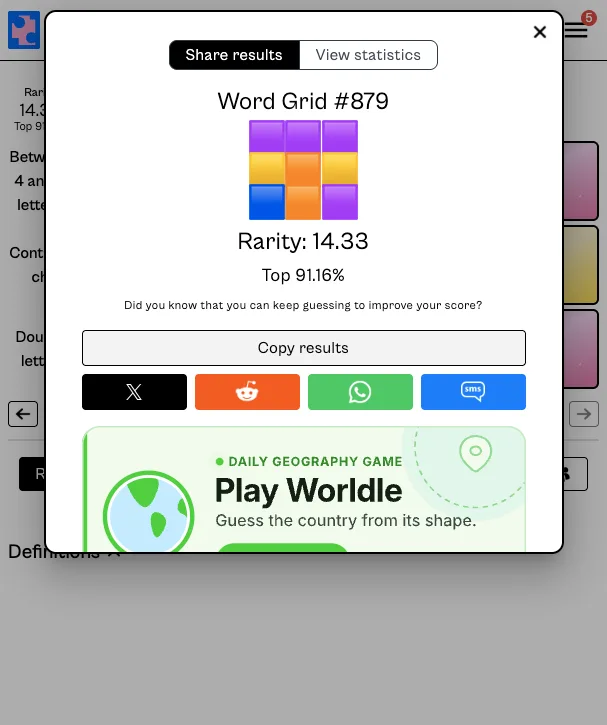
- Repeat until all nine squares are filled. That completes your grid and opens a share card.
- Keep going if you want. Guesses per square are unlimited, and your best word in each square counts.
Rules come in a handful of types: exact length, starts with, ends with, contains a letter sequence, double letter, repeated letters and a few others. "Contains et" means the letters must appear together, so BIDET works and EXIT does not.
What the colours and percentages mean
Each filled square shows the share of players who chose that word. Lower is better, and the tile colour shows the tier: Common is over 5%, then Uncommon, Rare, Epic, Legendary, Galaxy (under 0.1%) and Unicorn, a word only you have played. Your score is the sum of all nine percentages.
What happened in my game
My first pass used everyday words. BIDET (0.28%), MAPLE (0.30%) and MUFFIN (0.22%) landed in the rarest pink tier. SKETCH (1.75%) and MOCHA (2.08%) were Rare, while ORCHID (3.64%) and OTTER (4.60%) were Uncommon. The total was 14.33, with the result card reading "Top 91.16%".
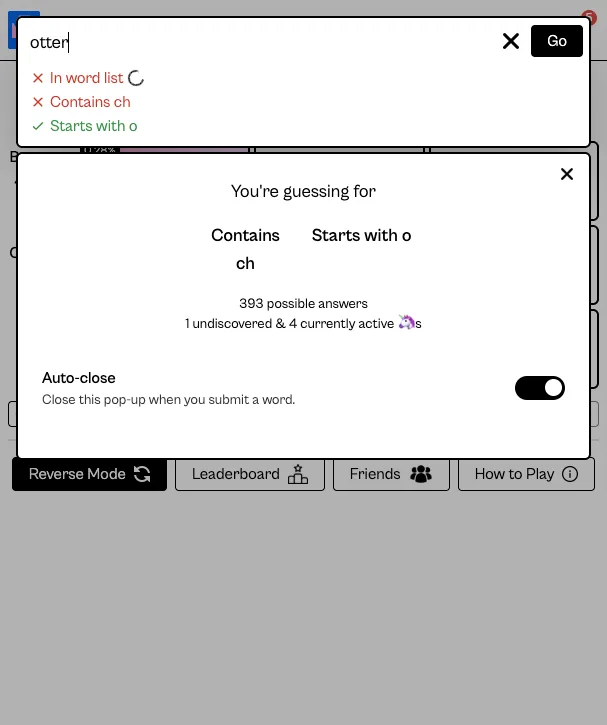
I also tested a mistake. Typing OTTER into the "starts with o / contains ch" square showed a live checklist: a green tick for "starts with o" and a red cross for "contains ch". The word was simply not accepted, and nothing was lost, so a typo or misread rule costs no attempts.
The biggest lesson came after the grid was full. I went back to OTTER's square ("starts with o / double letter") and tried OFFAL. It scored 0.68%, the square history listed both words, and my total fell from 14.33 to 10.42. One extra word gave most of the improvement. Swapping the two weakest squares is a better use of time than polishing the ones already below 0.5%.
Is a low rarity score actually good?
The score is relative to the day. Rarity is recalculated as more people play, so the same grid can score differently in the morning and the evening, and the in-game tutorial warns about this. A solver site claims that under 20 is generally good, but my game alone cannot confirm that. Puzzles with fewer possible answers will push everyone's scores up.
In my game, the obvious first thought was usually the costly one. ORCHID came to mind instantly for "starts with o / contains ch" and was my second-worst square, while the plain but less expected OFFAL beat OTTER by almost four points. That is one game, not a rule, but it is the pattern worth testing on your own grid.
Reverse Mode, archive and when it resets
Reverse Mode flips the goal: you try to match the most popular word in each square. I opened it and saw a fresh empty grid for the same puzzle, but I did not play it. The FAQ says a new puzzle arrives at midnight New York time, and the full archive back to game #1 is available for extra play. I did not test the archive, the leaderboard, the friends feature, accounts or the mobile app.
How it compares with Immaculate Grid
If you know the Immaculate Grid sports puzzles, Word Grid will feel familiar: same 3x3 crossing rules, same rarity score. The difference is that words have far more valid answers than athletes, so you rarely get stuck. The challenge is avoiding the answer everyone else typed. The appeal is less about whether you can solve it and more about how unusual a word you can find for each square.