
Nine squares built from NBA careers
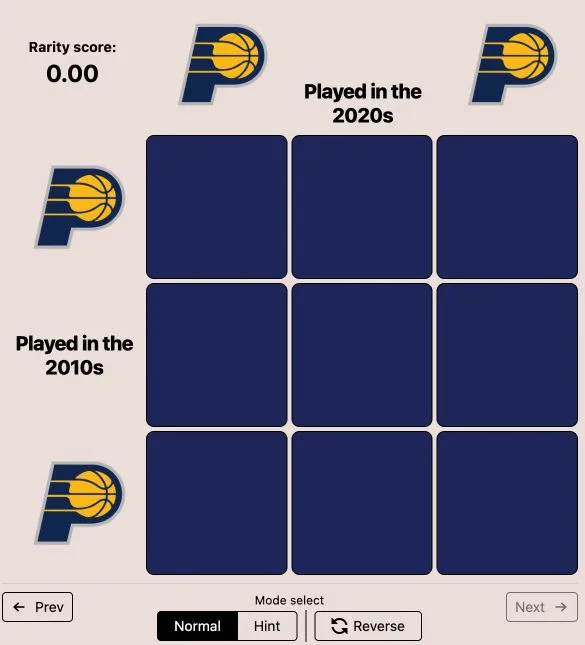
HoopGrids is a daily NBA trivia game built around a three-by-three player grid. Fill each square with a player who satisfies both its row and column, then look for less common valid picks to improve your rarity result.
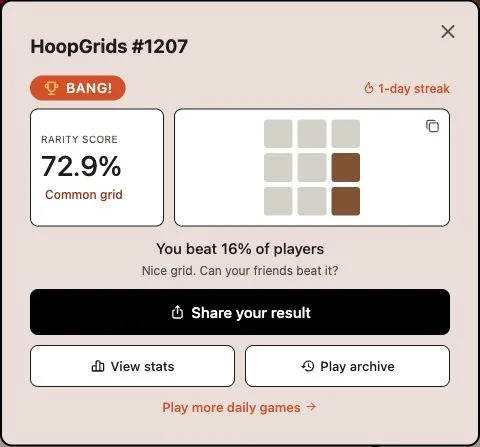
For this review, I completed archive grid #1207 on desktop on October 25, 2026, using Normal searches and Hint choices. The result was nine of nine correct and a 72.9% Common grid. This was an assisted archive run, not a completed attempt at the current daily challenge.
Read both conditions before choosing a player
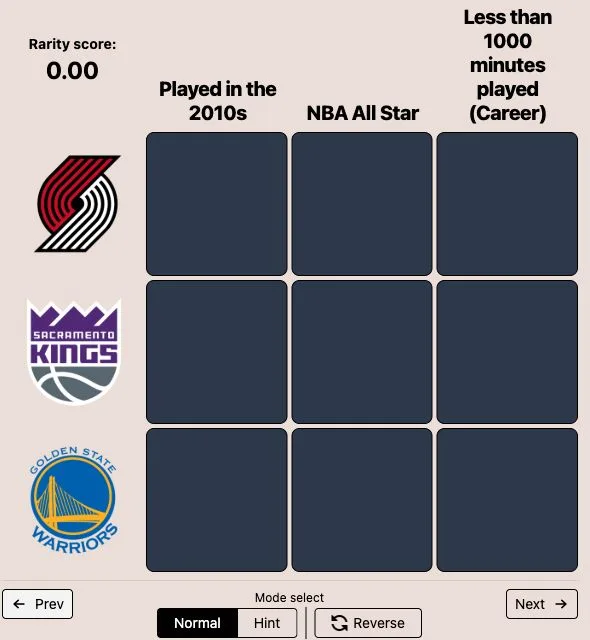
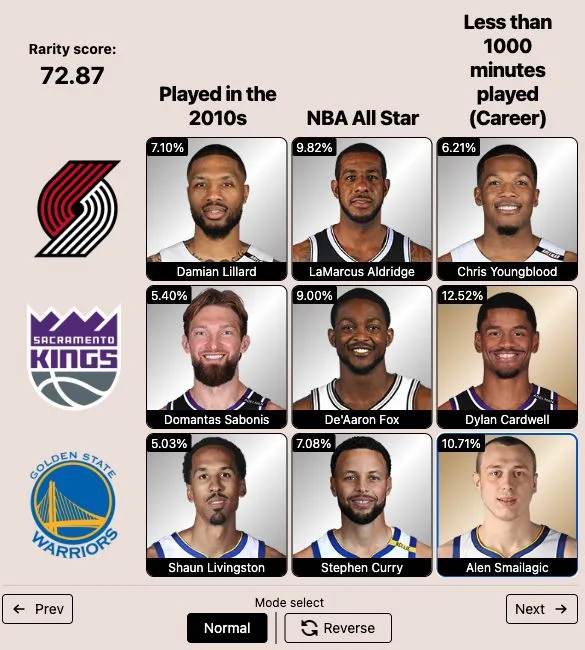
Clicking a square opens a player search. My first intersection paired the Portland Trail Blazers with “Played in the 2010s.” I searched for Damian Lillard, pressed Select, and got an accepted tile showing 7.10%. That percentage became useful later when comparing the rarity of different accepted answers.
The harder intersection paired Portland with “Less than 1000 minutes played (Career).” I tried Brandon Roy, which the game rejected: his name turned red and Select became disabled for that candidate. The square stayed available, and I could search again. That distinction matters: a rejected guess did not end this run or consume a visible life. The current rules explicitly allow unlimited guesses.
Pay attention to the scope of a label. A career minutes condition is different from minutes played for one team. The official rules also say that a team qualification requires at least one regular-season or playoff appearance, and that category achievements do not have to occur during the player's time with the paired team. Remembering a player’s most famous team is therefore only a starting point.
My accepted and rejected entries show how this grid behaved during testing. They are not an independent statistical audit of every player's eligibility, especially where career totals can change.
Hint turns recall into recognition
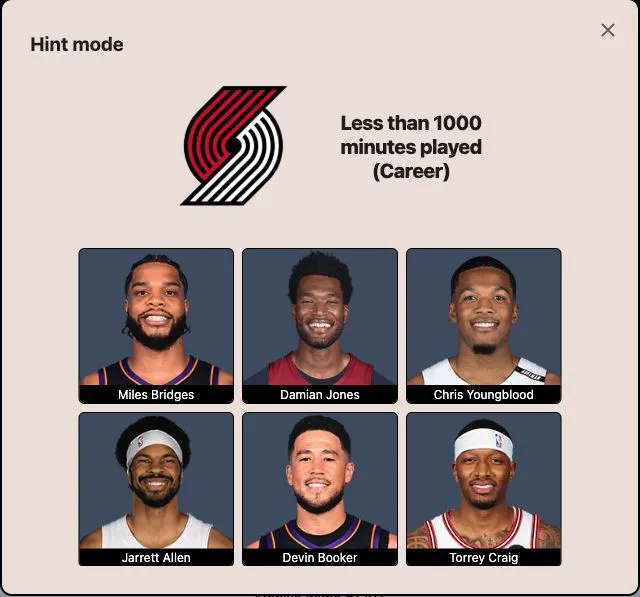
After the rejected Roy guess, I switched to Hint. The same square offered six named candidates, including Chris Youngblood, whom the game accepted at 6.21%. This changed the task immediately: instead of producing a name from memory, I could compare a small set against the two visible conditions.
I used that assistance for the remaining unfamiliar intersections. LaMarcus Aldridge filled Portland’s All-Star square, while Alen Smailagic filled Golden State’s career-minutes square. Completing the last cell brought up the “BANG!” result panel and its nine-of-nine confirmation.
Hint is useful if you recognize roster names more readily than you can recall them unaided. It also makes the completion result less informative as a test of unaided basketball knowledge. Start with Normal if you want that recall challenge, then decide whether recognition is a more enjoyable way to finish the difficult squares.
Finishing the board and chasing rarity are separate goals
In Normal scoring, the official rules favor answers chosen less frequently by other players. Getting a famous player accepted can fill a square without making it particularly rare. Lillard’s initial 7.10% was an acceptance plus an answer-frequency reading, not a 7.10% chance of being correct.
The completed board showed a total of 72.87, rounded to 72.9% in the result panel. That is this run’s result, rather than a benchmark for every puzzle. The rules permit changing submitted players even after completion; I reopened a filled square and saw its guess history, but did not complete a replacement experiment. Reverse scoring is also documented, though I did not play a full Reverse run.
The Prev control let me reach this archive grid while logged out. That gave me a complete board to learn from without presenting today's answers here. My recommendation rests on this desktop archive session; mobile controls, account features, saved progress, paid features, and the daily reset boundary were not tested. Investigation and pauses were mixed into the session, so it does not provide a reliable normal completion time.