
Real Bird Fake Bird gives you a topic and seven names each day, and you tap Real or Fake for each one. The number of fakes changes daily, and the game warns that all seven could be fake, so every card has to be judged on its own.
Real, fake, or real in the wrong place
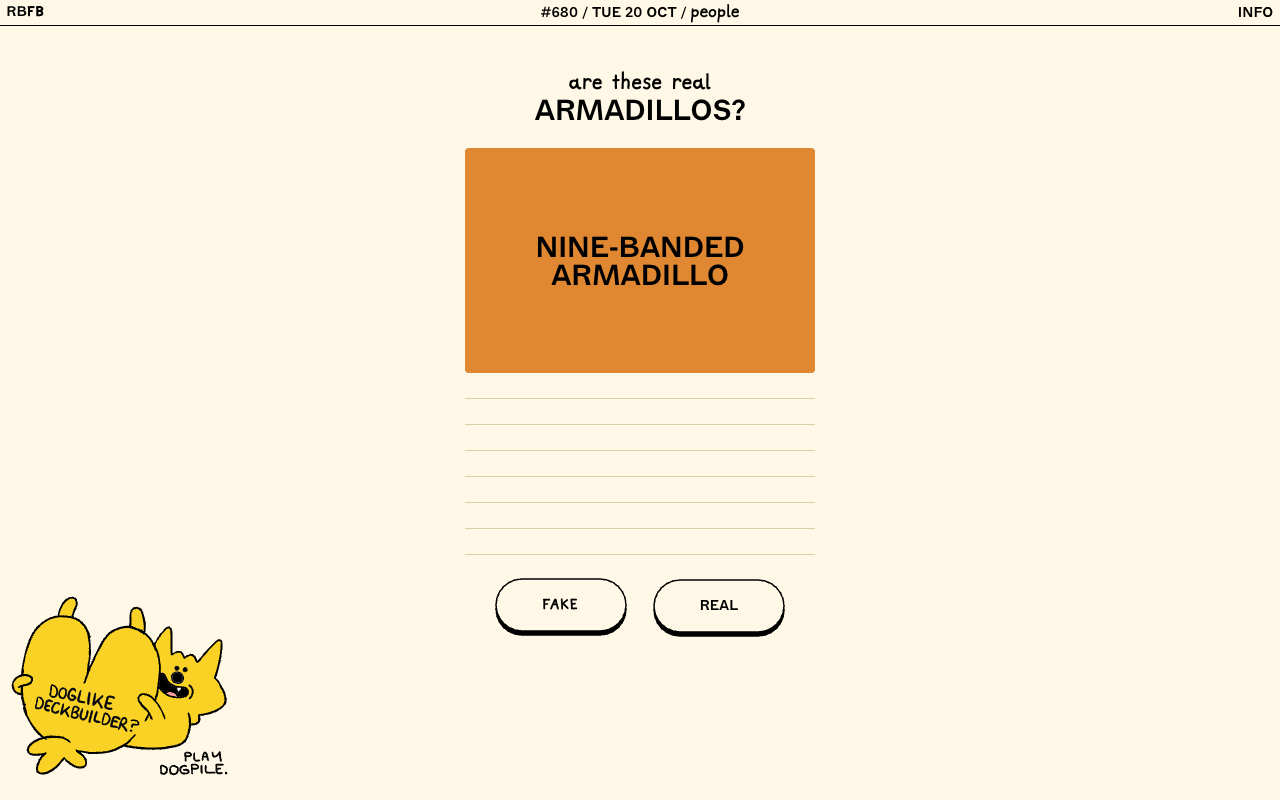
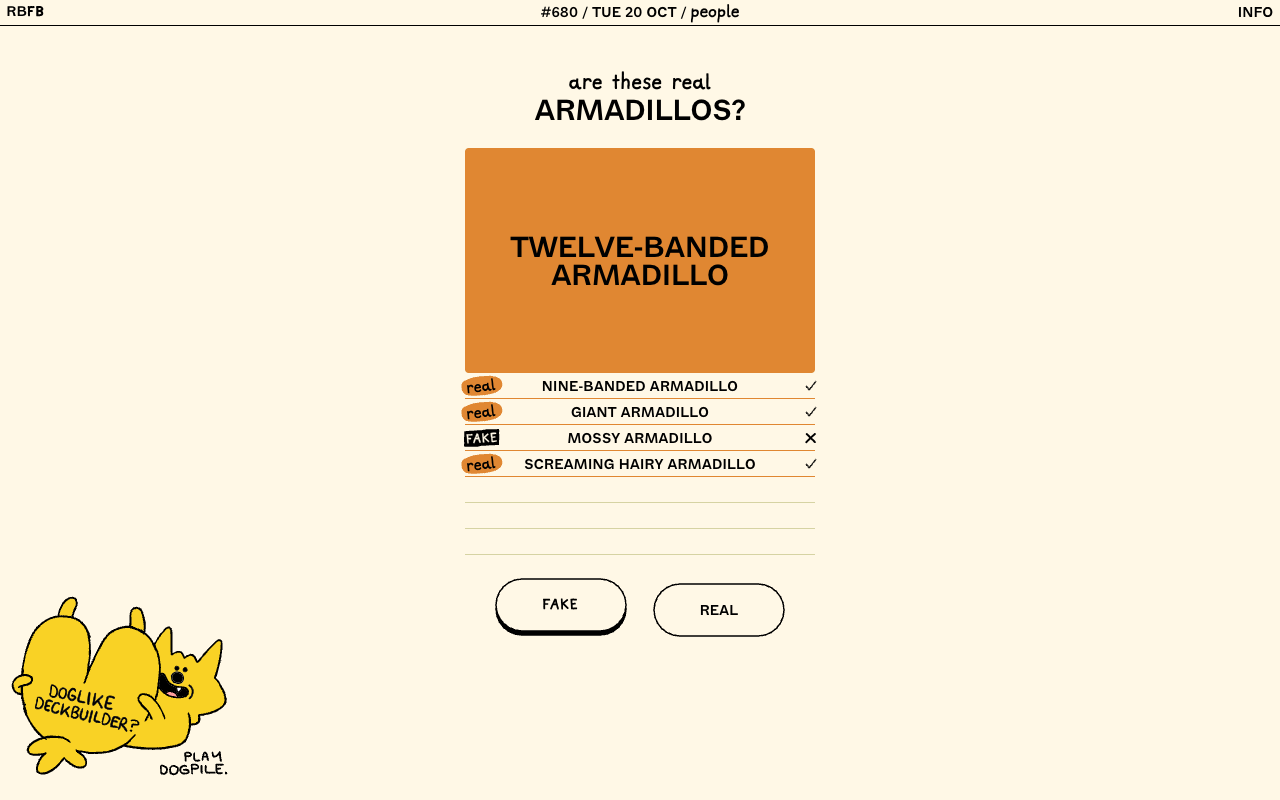
Press PLAY and the day's question appears above a big yellow card, such as "are these real statues currently missing fingers?". Tap REAL if the name exists and fits the question, or FAKE if it is invented or does not fit. The answer is marked straight away: the card drops into a list with a tick or a cross, and a label shows whether it was actually real or fake.
That instant marking matters more than it looks. On puzzle #688 (Wednesday 28 October 2026), our first three calls were right, then we called Augustus of Prima Porta real and the cross told us it was fake. Knowing that one well-known statue failed the "currently missing fingers" test made us stricter about the word "currently" for the rest of the round.
"Fake" also covers real things that do not belong. Every statue in that round was real; the question was whether each one is missing fingers today. Reading the question as carefully as the names is most of the skill.
The weekly calendar is a mood, not a rule
The info page lists a schedule: Arts on Monday, People on Tuesday, Food on Wednesday, World on Thursday, Leisure on Friday, Media on Saturday, Nature on Sunday, plus occasional Special days. Our Wednesday puzzle carried the "food" tag, yet the question was about statues. Treat the day label as a loose theme, not a promise about what knowledge you will need.
What the postcard shows after seven calls
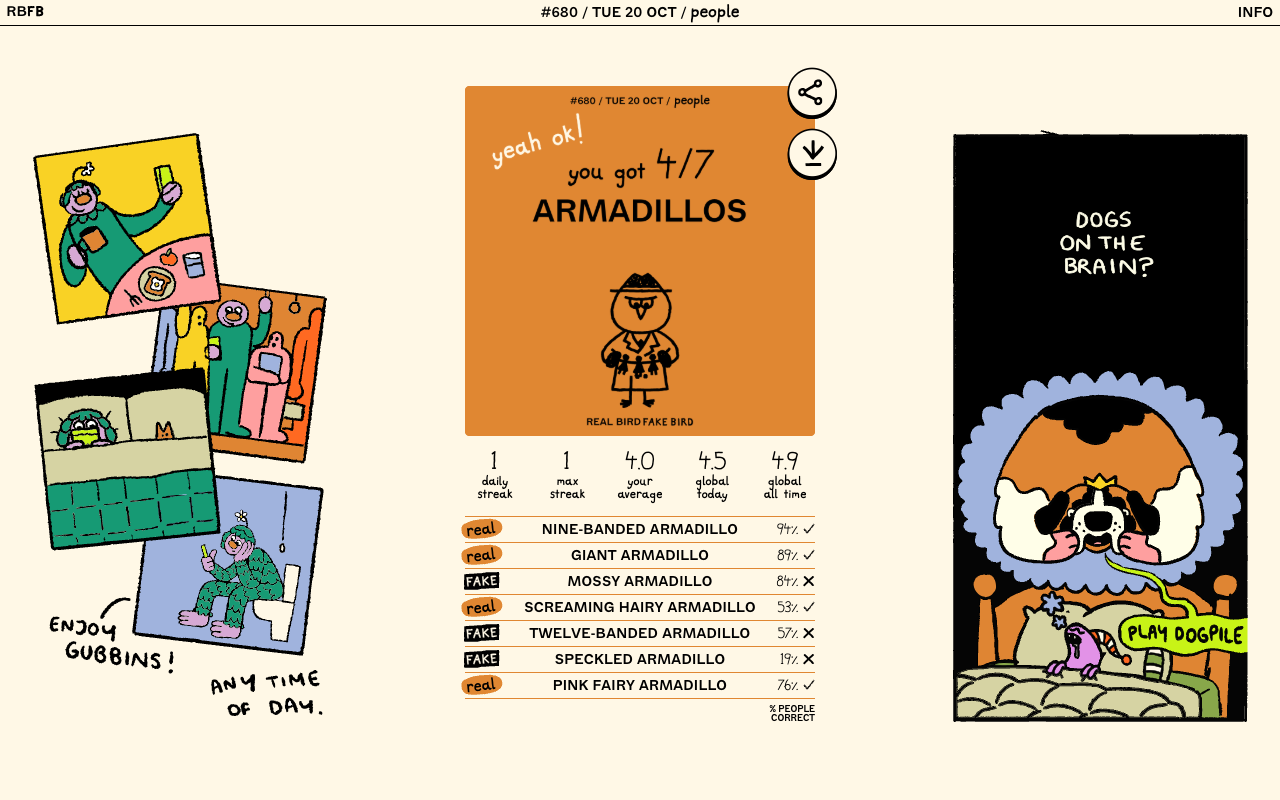
We finished on 5/7, which the game labelled "handsome". The results postcard listed a daily and max streak, our average (5.0 after one game), the global average for the day (4.7) and the all-time global average (4.9). Each name then shows the share of players who got it right. Augustus of Prima Porta, our miss, was the hardest card that day at 41%, while Venus de Milo was the easiest at 90%. Those percentages are the quickest way to see which kind of trap catches most people. The postcard can be shared or saved as an image, and the whole round took about a minute.
From a country radio show to a daily game
The info page backstory says Studio Folly's Darcy Smith first ran "Real Bird Fake Bird" as a segment with a conservationist on his dad's country radio show, guessing whether Australian birds were real. Studio Folly, the Melbourne team behind Gubbins, describes it on its project page as a game made in a month. Each puzzle credits an editor (Mickie Rubock on #688), and the info page invites enthusiasts of niche topics to submit their own puzzle ideas.