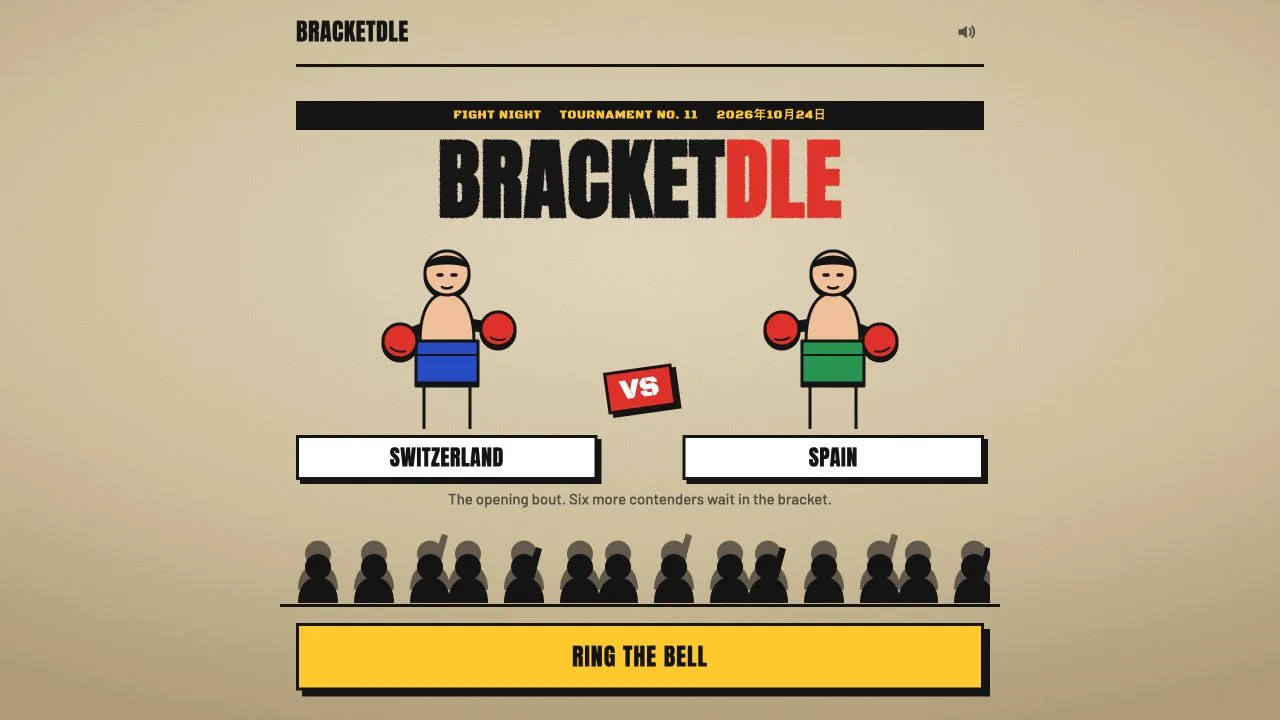

Bracketdle is a daily trivia tournament in which eight contestants compete according to a secret ranking measure. You choose the winner of each of seven matchups within ten seconds, using the eliminated contestants’ revealed figures to work out what the tournament is comparing.
Our first complete run finished at 1/7, including two missed deadlines. The important surprise was that a bad call did not knock us out: the actual winner advanced, another figure became available, and we could still make the remaining picks.
Read the unit before you ring the bell
The opening tells you what kind of contestants you have and the broad type of measurement. Our set featured eight countries and described the hidden quantity only as “a year.” That narrows the possibilities, but it does not tell you which event matters or which direction wins.
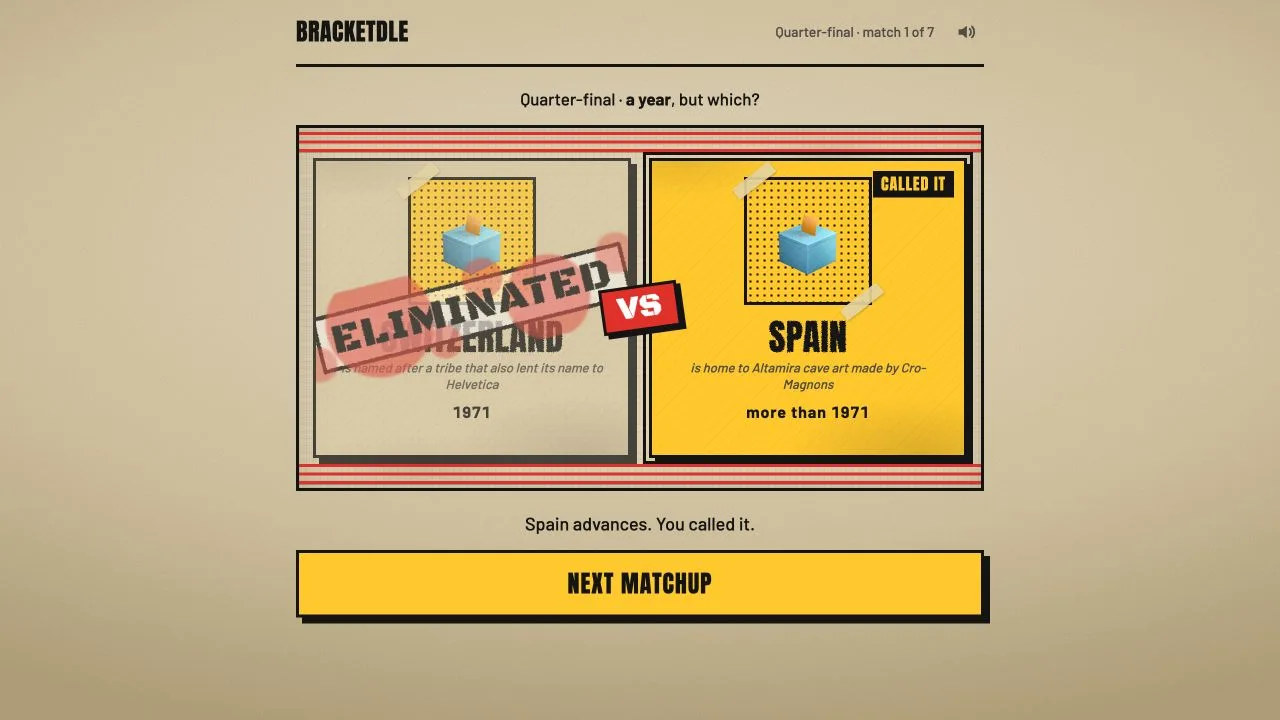
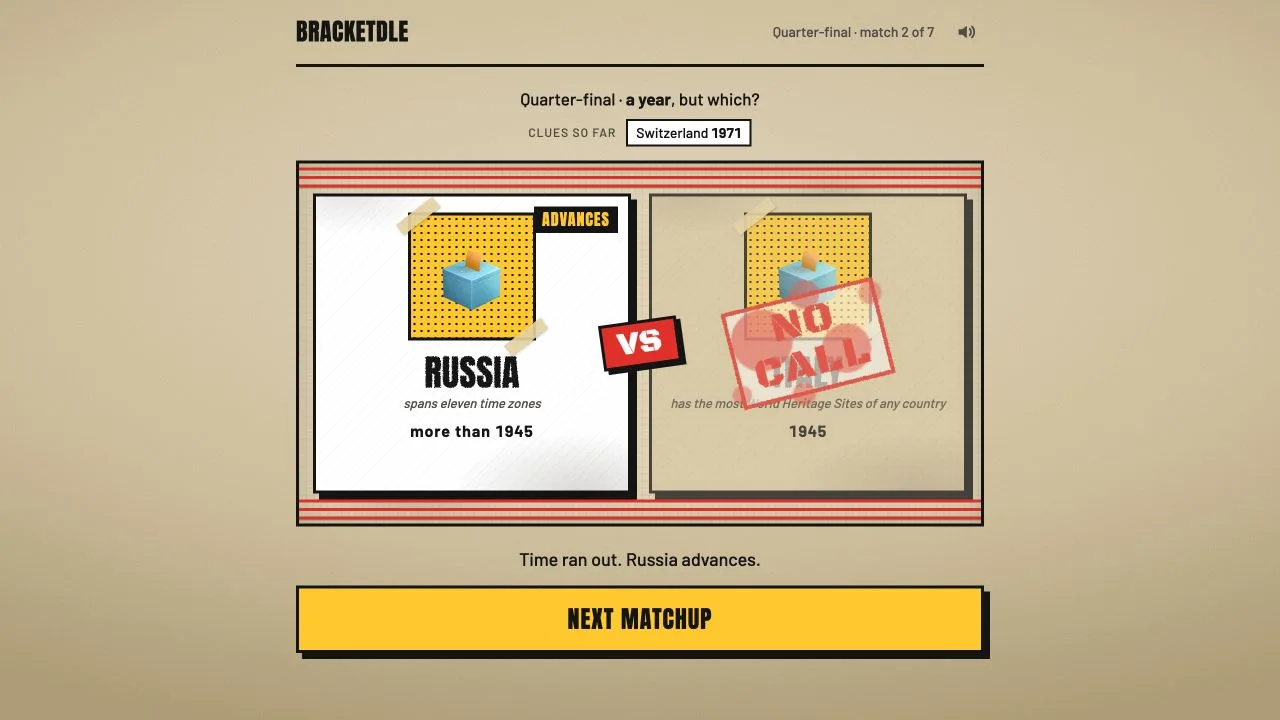
Choose Ring the Bell to begin. Each matchup presents two large cards with a name, an illustration and a short fact. Tap or click the contender you think advances. The country facts in our run supplied background, but they did not explicitly identify the hidden historical measure. Treat them as context rather than assuming that the most prominent fact is the question.
The boxing presentation makes the choice easy to locate: heavy borders, red ring ropes and a yellow highlight distinguish the contenders. Reading and interpreting everything before the timer ends is the harder part.
Turn each elimination into a new hypothesis
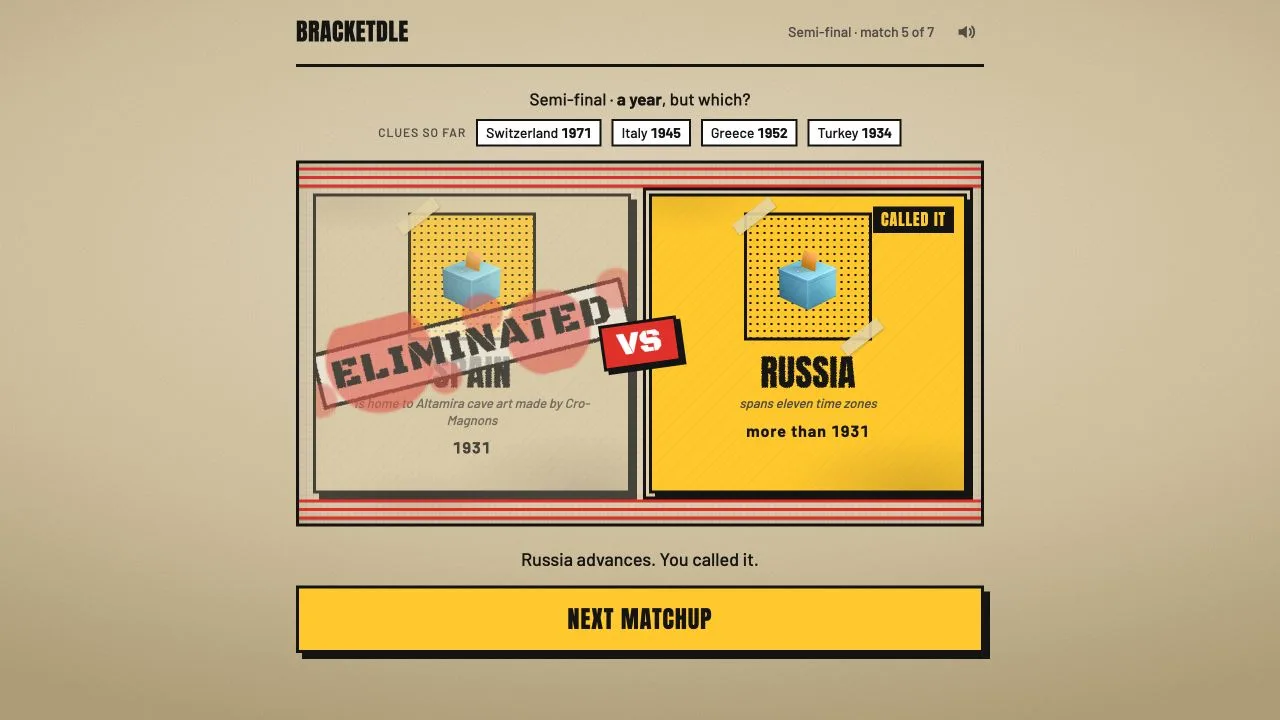
The loser’s exact figure is revealed after a matchup; the winner’s stays concealed until later. Those eliminated figures accumulate in a Clues so far strip above the next pair, so you do not have to remember every number yourself.
For example, our first incorrect pick revealed a year. By the first semifinal, four eliminated countries had supplied four dates. That gave us a pattern to reconsider, rather than seven unrelated trivia questions. We correctly called Russia over Spain in that semifinal, receiving a yellow Called it marker and another eliminated contestant’s date.
There was a confusing detail in this set: the advancing card displayed “more than” beside a revealed year, although the final explanation rewarded an earlier year. We saw that wording conflict in both the standalone game and iframe test. Do not treat that phrase as conclusive evidence about ranking direction; compare the actual advances and the eventual explanation too. This is a limitation observed in one tournament, not a verified issue across every daily set.
A timeout costs a call, not the whole bracket
Two of our matches expired while we were inspecting the interface. The game displayed No Call, announced which contender advanced, and revealed the eliminated figure. It then offered Next Matchup, just as it did after a deliberate pick.
That button creates a useful pause between decisions. Review the new figure and the existing clues before moving on; once the next matchup opens, its short decision window begins. Our missed deadlines also mean the 1/7 result should not be read as a fair benchmark of how difficult an uninterrupted human attempt would be.
At the final, both remaining figures were exposed. See the Bracket then showed the hidden measure, the full progression and our total correct calls. We inspected the result without copying it or submitting a suggested announcer line.
Daily timing and what we tested
The official rules say the tournament changes at midnight in your own time zone. They also explain that archive answers appear only after that day has ended everywhere, so a finished local day may not immediately have an available answer entry. We did not collect historical answers or play an archive tournament.
Testing on 24 October 2026 covered one complete desktop daily tournament and a partial iframe replay that successfully accepted a pick, revealed feedback and advanced to another match. That replay followed the answer reveal and was used only to verify embedding. Mobile touch controls, other daily topics and sharing remain untested.